


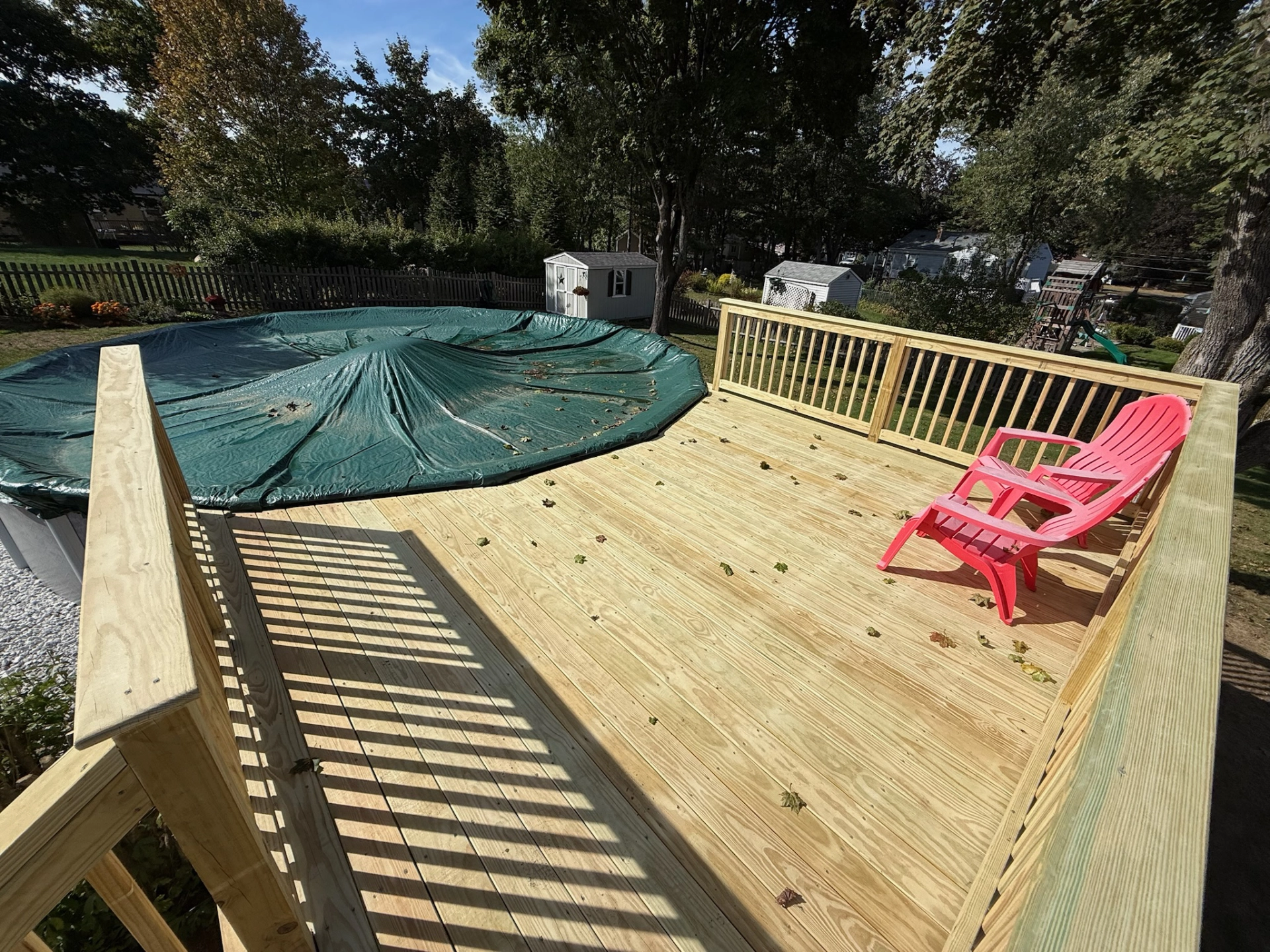
Choosing wood for a deck is one of the biggest decisions in the entire planning process. The right species lasts 25 years or more through Needham’s brutal winters, humid summers, and constant freeze-thaw cycles. The wrong choice warps, splits, and rots within a fraction of that lifespan, leaving homeowners with a costly rebuild and a structure that never lived up to its potential.
This guide breaks down the three most common wood options for a wood deck installation in Needham, MA, how each handles New England weather, and what to consider before committing to a material that will define the look and longevity of your outdoor space.
Why Wood Choice Matters in Needham
Needham sits in a climate that punishes outdoor materials year-round. Winters bring 50 inches of snow, repeated freeze-thaw cycles, and salt exposure from ice melt products. Summers push humidity above 70 percent for months at a time. Spring and fall storms deliver wind, hail, and driving rain that test every joint, fastener, and board across the surface.
The wood you choose has to handle all of this without losing structural integrity or visual appeal. A successful wood deck installation starts with matching the species to the conditions, then layering in proper framing, fastening, and finishing to protect the investment for decades to come.
Cedar: The Affordable Classic
Cedar is one of the most popular softwood options for residential decks across New England. The wood contains natural oils and tannins that resist rot, repel insects, and slow the damage that destroys untreated lumber within a few short seasons. Cedar also takes stain and sealer beautifully, which gives homeowners full control over the final color and tone.
The wood stays dimensionally stable through Needham’s temperature swings and remains widely available through local suppliers at a moderate price point. Cedar develops a soft silvery-gray patina if left unfinished, which many homeowners actually prefer for a natural aesthetic. Expect 20 to 25 years from a quality cedar wood deck installation when properly maintained over time.
Mahogany: The Premium Hardwood
Mahogany sits in the exotic hardwood category alongside Ipe, Tigerwood, and Cumaru, and it delivers premium performance for homeowners willing to invest in a long-term build. The wood is dense, naturally rot-resistant, and far less prone to the warping and cupping that affects softer species in New England’s freeze-thaw climate.
The deep, rich reddish-brown color of mahogany is what attracts most buyers. The tight grain pattern, smooth surface, and uniform appearance across boards deliver a finish that no softwood can match. A mahogany wood deck installation typically costs 2 to 3 times more than cedar upfront, but the lifespan often extends 40 years or longer with minimal maintenance.
Pressure-Treated Wood: The Budget Workhorse
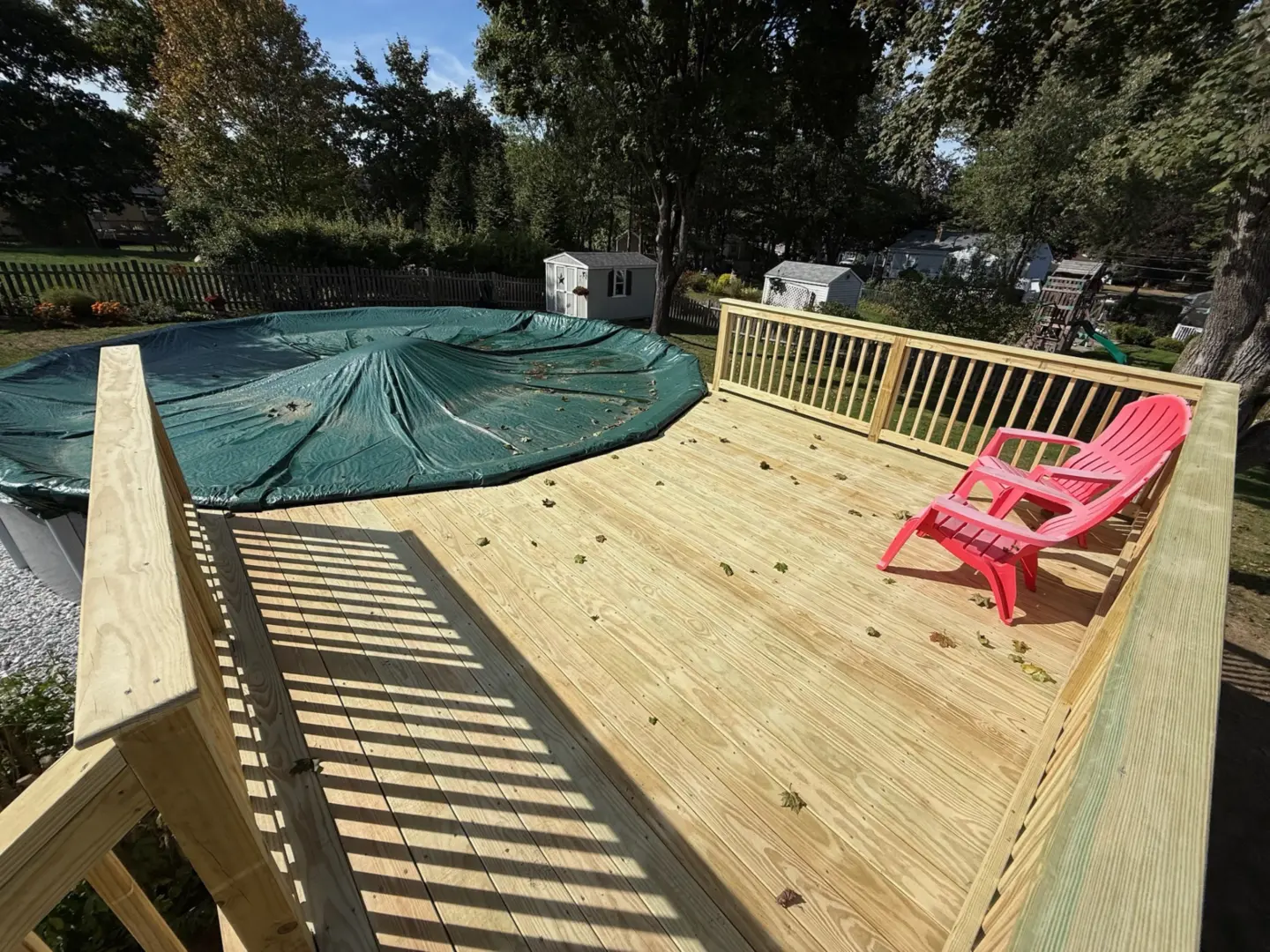
Pressure-treated lumber remains the most affordable wood option for residential decks in Massachusetts. The wood is southern yellow pine treated with preservatives that resist rot, decay, and termite damage, and it carries long manufacturer warranties against ground-contact failure when properly specified for the application.
The tradeoff is movement and appearance. Pressure-treated pine twists, cups, and shrinks more than cedar or mahogany as it dries out after installation, and the greenish tint left by the treatment chemicals fades unevenly over time. With proper fastening and regular maintenance, a pressure-treated wood deck installation still delivers 15 to 20 years of solid service at the lowest entry cost on the market.
How Each Species Handles New England Weather
Cedar handles Needham winters well thanks to its natural oils that resist water penetration and slow the rot process. This wood deck installation options expands and contracts modestly through freeze-thaw cycles, but the movement stays predictable when properly fastened. Sealing every two to three years extends the lifespan and preserves the original color significantly.
Mahogany performs best of all three options because its density blocks moisture from entering the wood fiber in the first place. Pressure-treated pine relies entirely on the chemical treatment to resist rot, since the wood itself absorbs water readily. The treatment works well for the framing and decking surface, but the wood requires more attention to fasteners and finishing to reach its full potential lifespan.
Maintenance and Long-Term Costs
Cedar needs sealing every two to three years to maintain color and slow weathering, or it can be left to gray naturally without losing structural integrity. The maintenance is straightforward and most homeowners handle it themselves with basic tools and a quality outdoor sealer applied during dry summer weather conditions.
Mahogany requires the least maintenance of the three, though many owners choose to oil the surface annually to preserve the deep original color. Pressure-treated pine demands the most ongoing attention, including regular fastener checks, occasional board replacement, and watchful inspection at every connection point where moisture tends to gather over time.
Choosing the Right Wood for Your Build
The right wood for your deck depends on your budget, your timeline, and how much maintenance you want to handle over the next two decades. Cedar offers the best balance of cost, looks, and longevity for most Needham homeowners. Mahogany rewards the higher upfront investment with a lifetime structure and premium aesthetic. Pressure-treated pine delivers solid value for budget-conscious builds.
An honest contractor walks through the tradeoffs in detail before recommending a material based on your specific lot and goals. For expert wood deck installation in Needham and across the surrounding Massachusetts communities, contact Bevilacqua Decking at (508) 254-8241 to schedule a consultation and choose the right wood for your build.