


Adding an outdoor kitchen to your Massachusetts home is one of the most exciting upgrades you can make. It takes backyard entertaining to an entirely new level, letting you cook, host, and enjoy meals outside without constantly running back and forth through the house. But building one in New England isn’t quite the same as doing it in a warmer climate. Between freezing winters, humid summers, and unpredictable shoulder seasons, there’s a lot to plan for before construction begins. Understanding what goes into a successful outdoor kitchen build will help you make smart decisions and avoid costly mistakes along the way.
Choosing Between a Deck and a Patio
One of the first decisions you’ll need to make is whether to build on a deck or a patio, and each option comes with its own set of considerations. A patio made from concrete, pavers, or natural stone provides a solid, fire-resistant surface that handles the weight of heavy appliances, countertops, and cabinetry without any structural concerns. It’s often the simpler choice from an engineering standpoint.
Building an outdoor kitchen on a deck is absolutely possible, but it requires more planning. The framing needs to support the added weight of appliances, stone or tile countertops, and any plumbing or gas lines. Composite and PVC decking hold up well to heat and moisture, but your contractor will need to reinforce the substructure to handle the load safely. Either way, the right foundation makes all the difference.
Appliances and Features
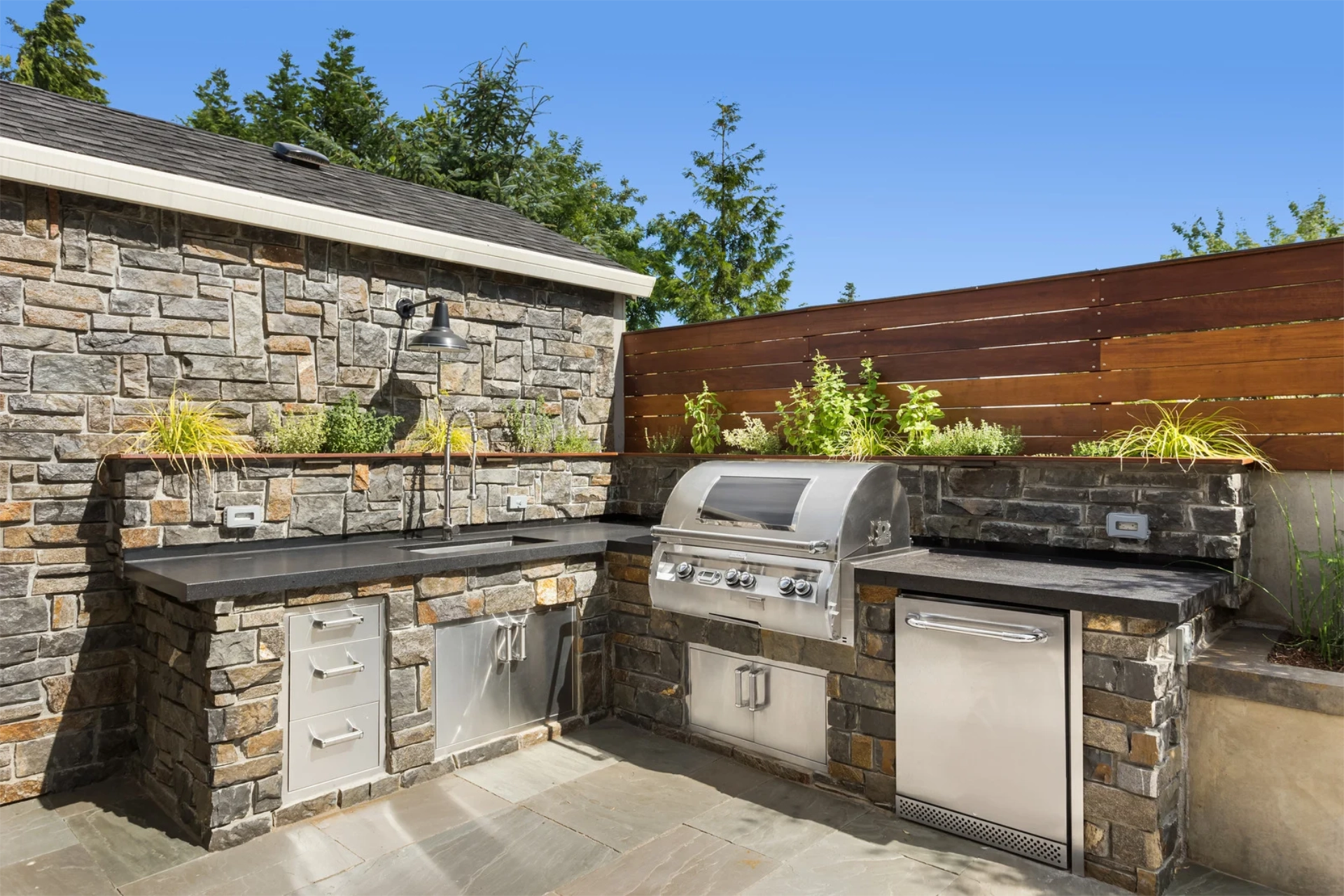
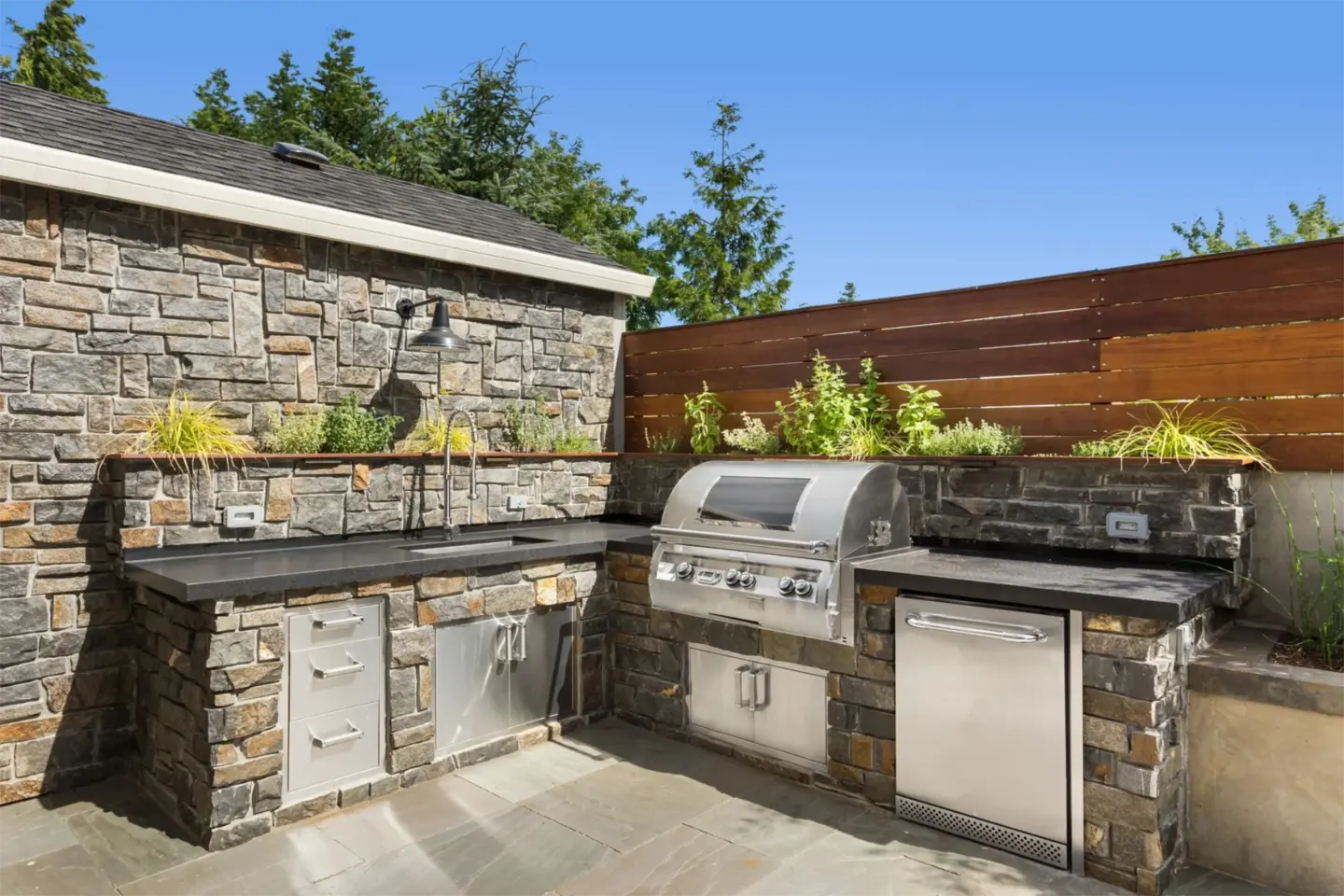
The appliances and features you choose will shape how you use your space and how much it costs. A built-in grill is the centerpiece of most setups, but many Massachusetts homeowners go further with additions like side burners, pizza ovens, smokers, sinks, refrigerators, and warming drawers. The more features you add, the more useful and enjoyable the space becomes.
Think about how you actually cook and entertain before finalizing your appliance list. If you’re a grill master who keeps things simple, a high-quality built-in grill with counter space and storage may be all you need. If you love hosting elaborate dinner parties, investing in a full outdoor kitchen with multiple cooking stations and prep areas will give you the flexibility to handle any menu.
Material and Countertop Options
The materials you choose need to handle everything Massachusetts weather throws at them. Granite, concrete, and quartzite are popular countertop choices because they resist heat, moisture, and staining while looking beautiful year-round. Tile and natural stone work well for backsplashes and accent walls, adding texture and personality to the design.
Cabinetry and base materials matter just as much. Stainless steel is the gold standard for frames and storage because it resists rust, heat, and moisture. Stone and brick veneers give the structure a polished, permanent look that blends naturally with your home and landscaping. A good contractor will help you select materials that balance durability, aesthetics, and budget for your outdoor kitchen.
Winterization and Seasonal Use
This is where building in Massachusetts gets a little more involved than in warmer states. Freezing temperatures, snow, and ice can damage plumbing, crack countertops, and deteriorate exposed materials if the space isn’t properly winterized. Any water lines, sinks, or gas connections need to be designed with cold-weather shutoffs and drainage in mind.
Covering your outdoor kitchen during the off-season with weatherproof covers or a purpose-built enclosure protects your investment and extends its lifespan significantly. Many Needham homeowners also add features like pergolas, covered roofs, or retractable awnings that shield the cooking area from rain and snow, making the space usable well into fall and early spring.
Permits and Local Codes
Before any construction begins, you’ll need to address permits and local building codes. Most outdoor kitchen projects in Needham and surrounding Massachusetts communities require permits, especially when plumbing, gas lines, or electrical work are involved. Your HOA may also have rules about size, placement, and design that need to be followed.
Skipping the permit process can lead to fines, forced removal, or serious problems when you try to sell your home. A reputable contractor will handle all permitting for you and make sure everything meets local codes and safety requirements before the first appliance is installed.
Budgeting Realistically
An outdoor kitchen can range widely in cost depending on size, materials, appliances, and complexity. Being honest about your budget from the start helps your contractor design a space that delivers the features you want most without unpleasant surprises midway through the project. It also gives you the flexibility to prioritize must-haves and save optional upgrades for later.
Don’t forget to factor in site prep, utility connections, permits, and finishing touches like lighting and seating. A trustworthy contractor will provide a detailed, itemized estimate so you know exactly where your money is going and can make confident decisions every step of the way.
Hiring the Right Contractor
The contractor you choose will determine the quality, safety, and longevity of your project. Look for a licensed, insured builder with proven experience designing and constructing outdoor kitchens in the Massachusetts climate. Ask for photos of completed projects, check reviews, and make sure they understand the unique challenges of building in New England.
At Bevilacqua Decking, we help Needham homeowners design and build beautiful outdoor kitchens that stand up to Massachusetts weather and deliver years of enjoyment. Whether you want a simple grilling station or a fully loaded setup with all the extras, our team is ready to guide you through every step. Call us today at (508) 254-8241 for a free consultation and personalized quote.